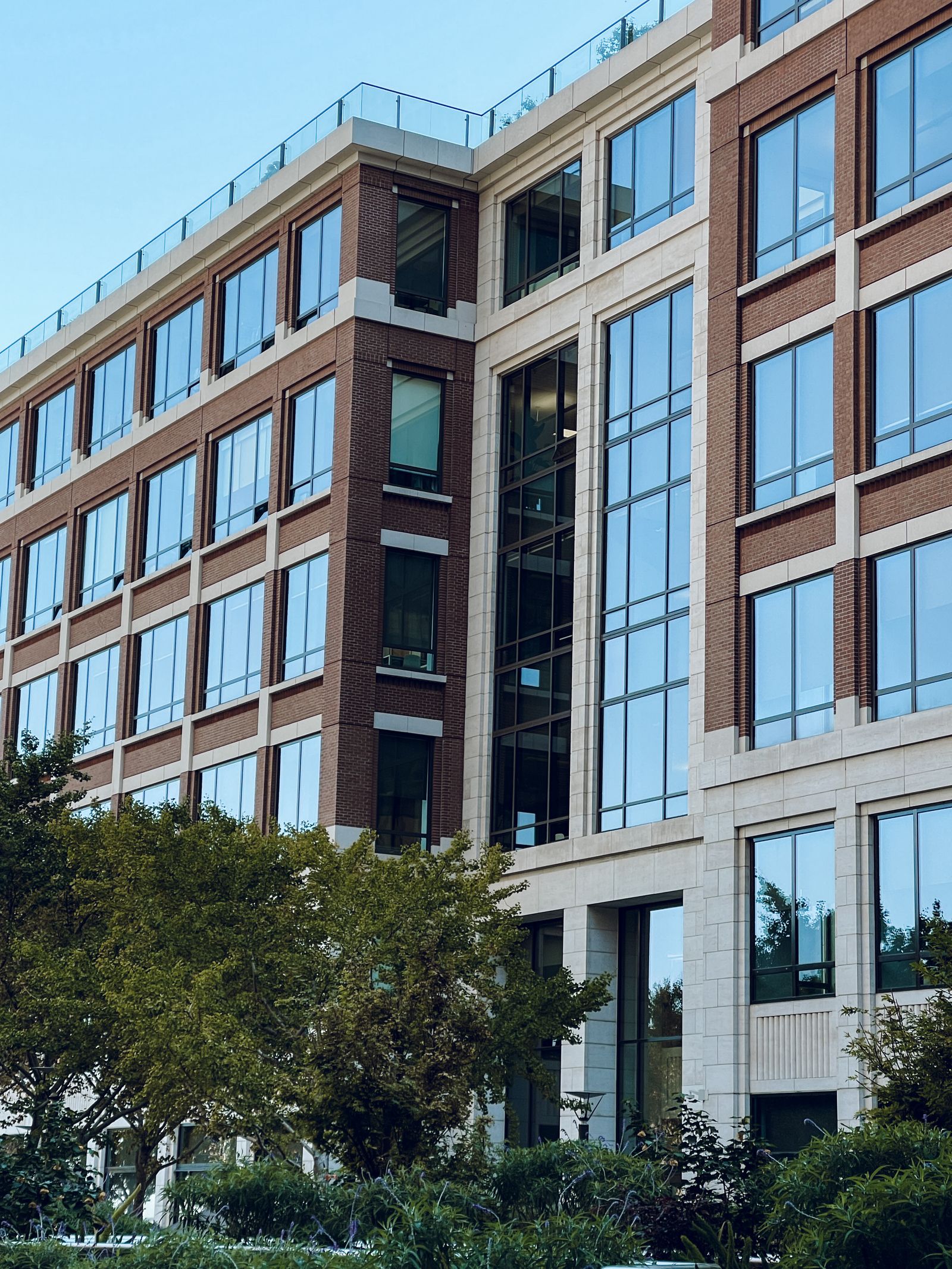
Walk the water path before selecting the cleaning method
Start at the target elevation and trace every likely path to grade. Note ledges, sills, canopies, downspouts, wall transitions, sidewalk slopes, curb lines, parking islands, planting beds, low points, drains, storm inlets, doors, and neighboring property edges. Water applied high on a building can emerge somewhere the team did not expect, especially where a canopy or parapet redirects it. A map should include the launch or staging area, hose routes, recovery equipment, pedestrian controls, and locations that cannot receive water or chemistry.
The same map helps compare access methods. A drone may reduce heavy equipment at the facade but still deliver water from a ground source. A lift may place a technician close to a detail while requiring longer hose runs or a larger protected setup area. Ground crews need enough room to manage both. The property should not approve a method based only on reach or height when the wash water path is unknown. The safe and compliant answer may be a smaller zone, a different sequence, a contained method, or postponement until drainage controls are available.
- Trace ledges, canopies, slopes, downspouts, low points, and inlets.
- Mark entrances, air intakes, electrical equipment, landscaping, and neighbors.
- Compare water delivery and recovery needs for drone, lift, and hand-access options.
- Define a stop point if runoff cannot be controlled as planned.
Keep sediment, chemistry, and building soil out of storm inlets
The first question is what the water may carry. A light rinse of a clean, compatible surface is different from a soft wash over pollen, organic growth, traffic film, bird residue, or loose facade soil. Chemistry, dwell, and rinse can mobilize material that was not visible from the ground. Charlotte-Mecklenburg Storm Water Services provides local stormwater context and guidance; the property and contractor should verify the current requirements and select controls suited to the proposed operation. A generic promise that water will be harmless is not a substitute for looking at the site.
Controls may include inlet protection, collection, diversion, vacuum recovery, work-zone barriers, staged rinsing, or a decision to use a different process. The correct measure depends on the property surface, volume, chemistry, grade, and available equipment. Controls also need inspection during the job. A clogged filter, a shifted barrier, or a sudden storm can change the plan. The crew should have authority to pause, secure the area, and keep polluted water from continuing toward a drain simply because the service window is underway.

Coordinate water use with occupied property operations
Water planning affects how the property functions during service. In Uptown, the plan may need to protect sidewalks, office entrances, loading, and public routes. In South End, pedestrians, restaurant patios, rail-adjacent movement, and mixed-use access can change quickly. On a campus or retail center, the route may cross parking circulation, delivery paths, or planted medians. Property management should identify the busiest movements, the locations of accessible entrances, the areas where doors must remain dry, and the people who can authorize a temporary pause.
Communication should be simple and specific. Security, valet, facilities, tenant representatives, and the cleaning crew should know the active zone, the alternate route, and the handback signal. A sign or cone does not replace an operator watching a moving route. When work is above a public or occupied area, the ground crew must monitor people and vehicles while the application team focuses on the facade. The goal is to prevent a clean building from becoming an unsafe or inaccessible property during the service window.
Use weather to protect both runoff controls and finish
Rain can overwhelm a planned containment setup, move soil toward an inlet, change the chemistry dwell time, and leave walking surfaces wet when guests or tenants return. Wind can move spray beyond the target and make aerial control unreliable. Heat and sun can change drying and appearance. A forecast is useful but not enough; the team should observe conditions at the building, confirm controls remain stable, and stop when the plan no longer protects the property or the public.
A schedule should include time for setup, a test area, controlled application, recovery, inspection, and safe handback. If a storm approaches after a zone is washed, the priority may shift from completing more facade to securing water routes and making the ground safe. The property should understand the rescheduling process before the work begins. That prevents pressure to continue under conditions that make runoff, drift, or finish unpredictable and allows the contractor to return with a workable window rather than forcing a poor result.
- Set rain, wind, heat, lightning, and drying limits before mobilization.
- Inspect barriers and recovery controls as weather changes.
- Keep a reserve period for ground handback and unfinished zones.
- Document weather interruptions rather than treating them as unexplained delays.
Close out with evidence the property can use
The water-planning record should be part of the service closeout. Note the zones completed, controls used, interruptions, remaining conditions, representative photos, and any follow-up needed for a drain, surface, or entrance. If a planned area could not be treated because containment was not workable, state that clearly. A property manager can then make an informed decision about a different access method, a smaller work zone, a specialty contractor, or a future date with better conditions.
Recurring service becomes easier when the property retains the map and updates it after changes to landscaping, construction, parking, tenant access, drainage, or facade condition. Charlotte buildings can change quickly as sites are redeveloped and occupied. A plan made for an empty storefront may not work after a restaurant patio opens. The most useful maintenance program is one that revisits the water path, records what worked, and keeps the quote, work window, and closeout aligned with the actual site.